Saturday, July 31, 2010

The Craft of the Potter from BBC

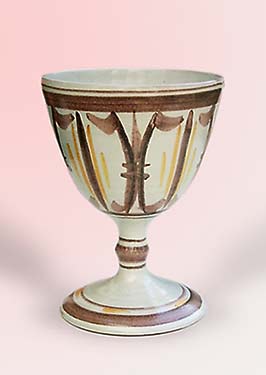
,Here are some great clips I found on youtube. Michael Casson interviews Lynne Reeves, Walter Keeler and Alan Caiger-Smith. The decoration videos have Alan Caiger-Smith, he explains and demonstrates how he paints and fires his lustre pottery.
Michael Casson

BBC The Craft of the Potter - Glaze and Fire (Part 1)
BBC The Craft of the Potter - Glaze and Fire (part 2)


Alan Caiger-Smith

BBC The Craft of the Potter Decoration part 1
BBC The Craft of the Potter Decoration part2 

English Delft part 2

www.gardinermuseum.on.ca


The last post covered some of the issues with English Delftware that I do not like. So here I would like to discuss some of the aspects that I prefer in the style. One problem is finding images to help illustrate my thoughts. Toronto's Gardiner museum has a limited selection available online. The Museum of London in England has a wider range of images online (I posted some images here), many of the tiles

English Delft

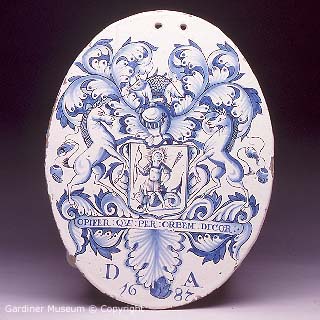
The Gardiner museum maiolica collection of is worth visiting. Here are some pill-tiles from England they have the Latin motto OPIFER:QUE:PER:ORBEM:DICOR (“I am spoken of all over the world as one who brings help.”) source. Objects used…
Pill-tile with the Arms of the London Society of Apothecaries


Wednesday, July 28, 2010

You're a flawed facade


http://www.tichelaar.nl/projecten/architectuur.php

Some tiles from Holland. It's great how they used the tile with the glaze flaw in the final product.

Tuesday, July 27, 2010

Another little trip

Tiles, tiles and more tiles. I would like to write about tiles in my next few blogs. It may be an interesting opportunity to show tiles that interest me and some tiles that  I have made. Some sketches for tiles may also be shown in the next few posts. But as a little teaser here is an interesting website from London England. http://www.museumoflondon.org.uk/ceramics/pages/ceramics.asp It has an interesting collection of European pottery from the Neolithic period to the 20th century. I fell in love with this website two years ago while I was doing research in preparation for my second year at Sheridan. Here is the link to the page where you can find these tin glazed (maiolica) tiles. http://www.museumoflondon.org.uk/ceramics/pages/category.asp?cat_id=749&page=1 This little journey will take us from England through Europe and end up in Turkey.

Monday, July 26, 2010

The exciting prequel!

So the other day I posted a little video clip. I wasn't completely honest about it. It was related to clay, that squirrel was on a tree behind me when I was digging up the clay. I think it was worried that I was looking for its food. I would like to apologize for the poor quality of the video and to the squirrel. This is clip of the find, just another obscure ceramic moment. Here are some pics of maiolica pieces I made 2008-2009.

A care bear stare or a stone in the bosom.

Here are some images and thoughts that I would like to share with you.

"The kanji characters 懐石 used to write kaiseki literally mean "stone in the bosom." These kanji are thought to have been incorporated by Sen no Rikyu (1522-91), to indicate the frugal meal served in the austere style of chanoyu (Japanese tea ceremony). The idea came from the practice where Zen monks would ward off hunger by putting warm stones into the front folds of their robes, near their bellies." http://en.wikipedia.org/wiki/Kaiseki

Here is an image from a great blog cake wrecks.com. For some reason I thought of the Tea Ceremony and how I haven't made any cake plates. I am currently without a studio or kiln but I do have two hands and a heartbeat so I have been thinking of making some prototypes and then molds if I like any. Here is a food dish from the Freer Sackler online collection this dish is in a Ogata Kenzan style a famous Japanese potter. I wonder what would happen if these images were used as an inspirational starting point for a cake plate. It looks like its time to get to the drawing board.
Food dish with design of blossoming plum
late 19th century
Miura Ken'ya, (Japanese, 1821-1889)